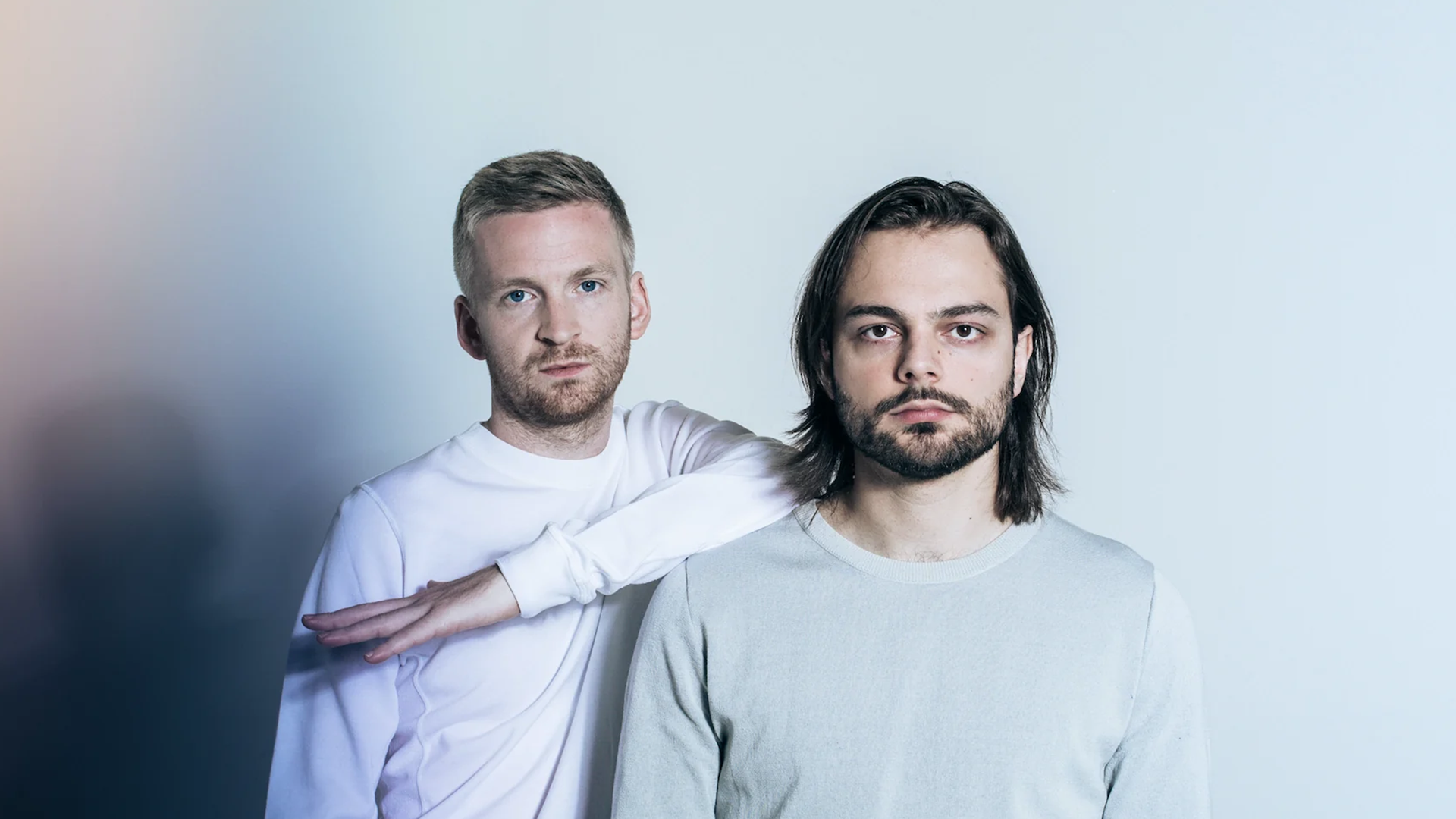
Photo by XLR8R
"I Hope People Find Some Refuge For A Moment..."
Dance music has long promised escape, yet it seldom acknowledges what its audiences are seeking to escape from. The conventions of the club — the build, the drop, the collective euphoria — have historically left little room for the quieter emotions people carry with them. In the North Atlantic, however, a different tradition was emerging. Iceland, a nation of fewer than 400,000 people, developed into one of the most fertile music scenes in the world, one in which classical composers, pop producers and experimental artists routinely share studios, venues and collaborators. Its scale has proven an advantage rather than a limitation. From that close-knit environment emerged a duo who would make one of the more improbable arguments in contemporary electronic music: that a techno record could hold grief, hope and stillness while still compelling a crowd to move.
Kiasmos comprises Ólafur Arnalds, the Icelandic composer whose solo piano work helped shape the neo-classical movement alongside Nils Frahm, and Janus Rasmussen, a Faroese producer then best known for the electro-pop group Bloodgroup’s. Their partnership began around 2007, when Arnalds was working as Bloodgroup's touring sound engineer. After performances, the two would listen to dark, uncompromising techno, and the beats they began producing on the tour bus were never intended to form the basis of a band. The name itself reflects this spirit of exchange: a deliberate misspelling of chiasmus, the rhetorical device in which one phrase is inverted against another — an apt description of a classical pianist and a pop producer trading role.
Erased Tapes, the London label that already represented Arnalds as a solo artist, issued the duo's first tracks, "65"and "Walled," in March 2009 on a split release with labelmate Rival Consoles. The Thrown EP followed in 2012, constructed from string recordings sampled from Arnalds' own solo album and reworked for movement rather than contemplation. The project's defining principle was established early: acoustic piano and strings in place of synthesized imitations, set against restrained yet insistent percussion.
In 2014, after five years of intermittent collaboration, the pair set aside dedicated time in Reykjavík. Over two weeks they produced a new idea each day, refining the strongest into Kiasmos, released on Erased Tapes on 27 October 2014. Neither anticipated its reception. Tracks such as "Looped," "Bent" and "Burnt" reached well beyond the neo-classical audience, finding their way into clubs and festival line-ups that had rarely accommodated orchestral arrangements. By reimagining minimal techno through string writing and a notably spacious production style, the album transformed a side project into one of electronic music's most sought-after live acts.

A series of EPs followed — Looped in 2015, then Swept, and Blurred in 2017, the latter featuring a remix by Bonobo — yet Kiasmos was never a full-time endeavor, and both members' individual careers continued to expand. Arnalds received a BAFTA for his Broadchurch score, along with Grammy and Emmy nominations, and established himself as one of the most respected composers working in film and television. Rasmussen built a substantial production career, performed as a DJ at major venues internationally and was nominated for the Nordic Council Music Prize. For much of the following decade, Kiasmos endured chiefly in the memories of those who had witnessed them live.
Their second album took ten years to complete, and both members have acknowledged that the process tested their friendship. Work began during the disrupted years of 2020 and 2021, including a month at Arnalds' studio in Bali, where the pair sampled gamelan percussion and Rasmussen gathered field recordings of birdsong, insects, and the island at dawn. Those recordings form the foundation of "Dazed," whose structure was completed within a few hours of a single morning. On their return, they travelled to Akureyri in northern Iceland to record strings with SinfoniaNord, a division of the North Iceland Symphony Orchestra, marking their first collaboration with the ensemble.
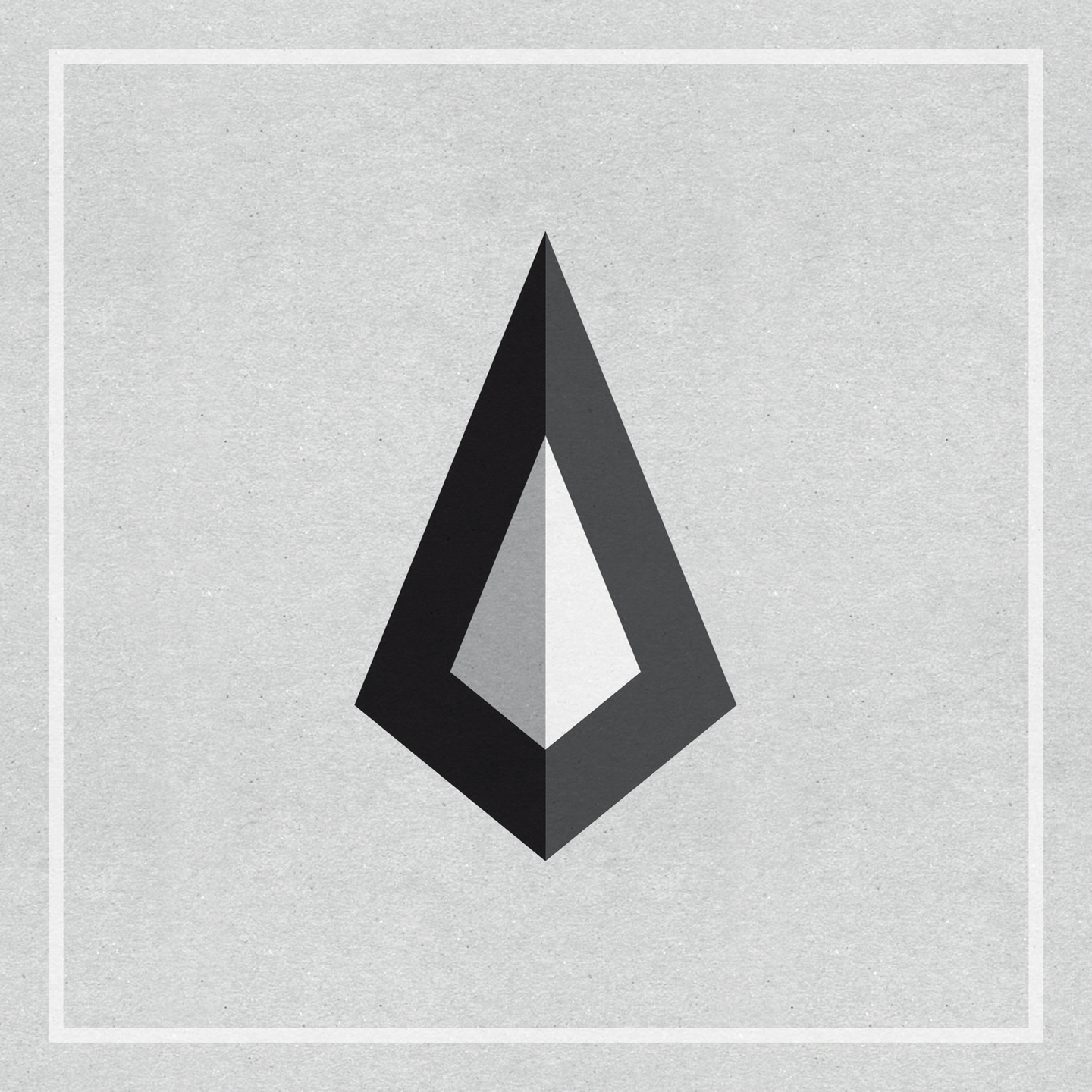
II was released on 5 July 2024, its artwork anticipating the music within: the duo's diamond emblem engulfed in flame, with a phoenix rising from it. The record is broader and more energetic than its predecessor, drawing on the broken rhythms of UK dance music and challenging one of the genre's most established conventions. Where a club track typically breaks down, accumulates tension, and then resolves it through the drop, Kiasmos frequently withholds that resolution. They refer to this as the anti-drop, a device that either denies the anticipated release or delivers it from an unexpected direction.

The album took the duo across four continents over the following eighteen months, to sold-out venues and their first performances in New Zealand. Rather than hurrying towards a third record, they entrusted the material to close collaborators. II Reworked, released on vinyl and CD on 3 July 2026 and digitally on 7 August, features Alex Somers detuning and slowing the piano and string parts, Rachika Nayar and Nina Keith (Disiniblud) reinterpreting its emotional core through electronics, and Icelandic composers Kjartan Holm and Sin Fang drawing the material towards drone and ambient textures. The result is a portrait of the album in the hours after the performance has ended.
The significance of Kiasmos lies less in a particular sound than with the permission it extends to listeners. Arnalds describes their music as emotional rave, and the duo have adopted crying on the dance floor as an unofficial motto. The phrase may appear light-hearted, yet it describes something genuine about their performances. Club culture has traditionally treated vulnerability as something to be left outside; Kiasmos have built their live show around welcoming it, so that the climax of a track is as likely to bring tears as euphoria. When discussing II, they speak not of spectacle but of hope, and of their wish for the music to offer shelter, whether it is encountered while dancing, over morning coffee or in meditation.
This outlook carries a spiritual dimensionclosely tied to their origins. Raised on neighboring islands at the edge of theNorth Atlantic, in communities where everyone is known and the elementsconstantly remind inhabitants of their own scale, Arnalds and Rasmussen createmusic that treats emotion much like weather: something that arrives, passesthrough and leaves its listener altered. Their working methods reflect the samephilosophy. Songs frequently remain untitled until completion so that theirmeaning stays open, and the pair credit friction rather than inspiration — thegradual, incremental progress that sustains both a friendship and a body ofwork.
Kiasmos never sought to soften electronicmusic; they sought to make it more honest. They retained the kick drum, the volume,and the late hours, while insisting that audiences be free to feel whateverthey brought with them. A decade, two albums and one burning diamond later,that conviction remains their most radical contribution: the demonstration thata club can be a place to come undone, provided no one does so alone.
Written by @Arriv3r
Edited by: @Arriv3r
Insight.


